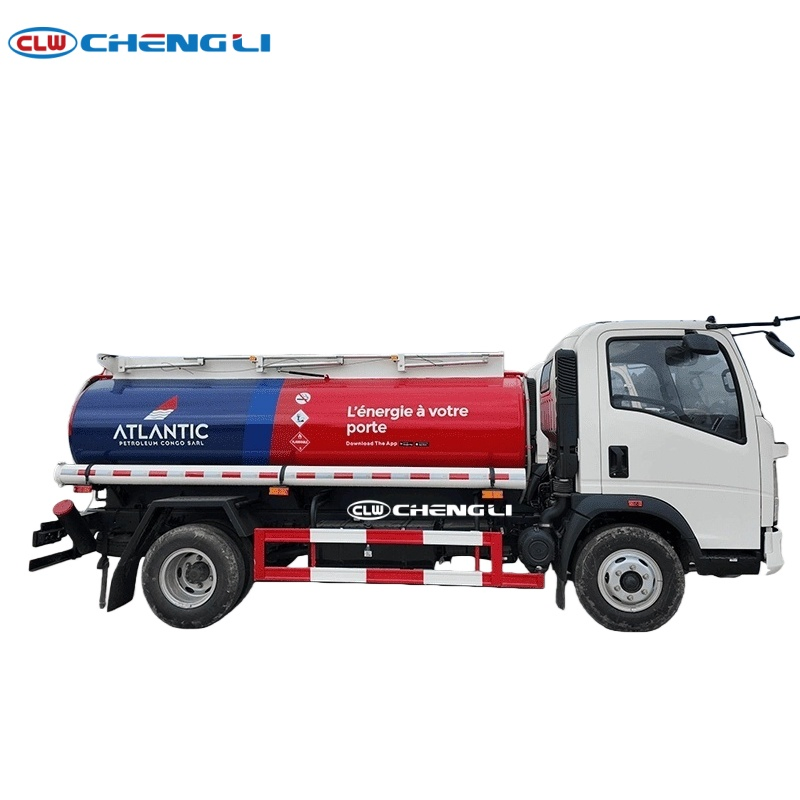
Choose a fuel tanker by the volume needed between replenishment stops, then check the fuel, complete vehicle mass, axle distribution and delivery equipment. The 5 to 30 m³ range spans compact mobile dispensers and larger distribution vehicles; it is not a universal ladder of usable payload. A large tank cannot automatically be filled to its geometric capacity for every liquid and every route.
The fuel tanker and refuelling truck range includes the configurations compared below. For fleet buyers in Nigeria, Ghana, Kenya, Tanzania, Zambia and Zimbabwe, the useful starting point is the same: define the delivery task and the actual chassis before selecting a tank size. No country-specific road or import approval is implied by this comparison.
1. Compare the actual capacity bands
One cubic metre equals 1,000 litres. That converts the unit of volume only; it does not convert volume into cargo mass. Keep nominal tank capacity, usable operating fill and fuel mass as separate entries in your purchase brief.
| Configuration | Nominal tank size | Drive layout | Equipment to compare |
|---|---|---|---|
| CLW4200FUE1 mobile fuel dispenser | 5 m³ | 4×2 | Dispenser, metering system, reel and fuel gun |
| Dongfeng D7 fuel tank truck | 9.9 m³ | 4×2 | Oil pump, bottom-loading equipment and compartment layout |
| Dongfeng D9 refuelling tank truck | 13 m³ | 4×2 | Oil pump, hoses and loading/unloading interfaces |
| FAW J6L fuel supply truck | 26–30 m³ | 8×4 | Fuel pump and bottom-loading system |
| Sinotruk HOWO refuelling tank truck | 30 m³ | 8×4 | Oil pump, compartment options and loading/unloading interfaces |
The 5 m³ dispenser is a compact comparison point where the work includes dispensing directly to vehicles or machinery. The 9.9 and 13 m³ Dongfeng configurations provide intermediate tank sizes. The FAW configuration has a 26–30 m³ tank range, whereas the HOWO comparison is a 30 m³ configuration. The final tank and equipment package should be written against the individual vehicle, not selected from a brand name alone.
Do not select the largest truck solely to reduce the number of replenishment trips. Include access to the receiving point, the length of the route and how much fuel each customer or machine actually takes. A route with many small drops may put more emphasis on metering, hose handling and compartment management than on maximum tank volume.
2. Separate transport duties from on-site dispensing
A transport-focused tanker moves fuel between storage points. Its loading and unloading connections, pump arrangement and compartment allocation should match the receiving installation. A mobile refuelling operation also needs the equipment used to deliver measured quantities directly into individual tanks.
The CLW4200FUE1 configuration includes a dispenser, metering system, reel and fuel gun. Those are meaningful purchasing details, but they do not establish that every other tanker carries the same package. The oil pump and loading equipment on the larger vehicles must be compared independently. A transfer pump does not, by itself, describe a complete metered retail or machinery-refuelling installation.
List the receiving connection, desired delivery method, hose reach, number of compartments and required measurement arrangement. Where multiple products are carried, define the separation and handling procedure with the operator. Specify the exact fuel and its compatibility with the tank, seals, valves, pump and hoses. Do not order simply by asking for an oil truck.
3. Check operating fill, mass and route access together
For planning, liquid mass equals operating volume multiplied by the density of the actual fuel under the relevant conditions. Use the fuel supplier's data rather than a generic fuel-to-tonnes shortcut. Add the completed vehicle, equipment, crew and other carried items when assessing the loaded truck.
The permissible working fill must also respect the applicable vehicle and axle limits. A nominal 30 m³ tank is therefore not a statement that every 30 m³ load is acceptable. Compartment fill patterns can change axle distribution even when the total volume stays the same. Ask for the proposed loading arrangement as well as the overall tank capacity.
Measure the entrance and turning area at the depot and delivery sites. Compare the selected vehicle's overall dimensions, wheelbase and access to discharge controls. A longer 8×4 truck and a compact 4×2 dispenser should not be treated as interchangeable solutions merely because both can move fuel. Include the actual route surfaces and stopping locations in the enquiry.
4. Build a quotation around the delivery system
Send the fuel type, required volume per day, typical drop size, replenishment location and intended tank capacity. Add the chassis preference, steering side, compartment layout, pumping or dispensing method, hose reach, quantity and destination. Identify any tender requirements as requirements to be assessed, not as capabilities assumed to be standard.
Ask the offer to separate tank construction, pump, meter or dispenser, hoses, loading connections and optional equipment. Compare access for inspection and maintenance, along with the operating information supplied for the actual system. This produces a more useful comparison than choosing between two offers labelled simply fuel tanker truck.
Chengli provides project customisation and OEM/ODM. Discuss the tank, compartments and delivery equipment alongside the chassis selection. Reference prices, where displayed on the individual configuration pages, are budgeting information rather than FOB or CIF quotations. The agreed vehicle, quantity, equipment and delivery scope determine the final commercial offer.
Send your fuel delivery brief with the required capacity and delivery arrangement so that suitable configurations can be compared on the same basis.