Start with the lift at the required radius
Browse the relevant vehicle category
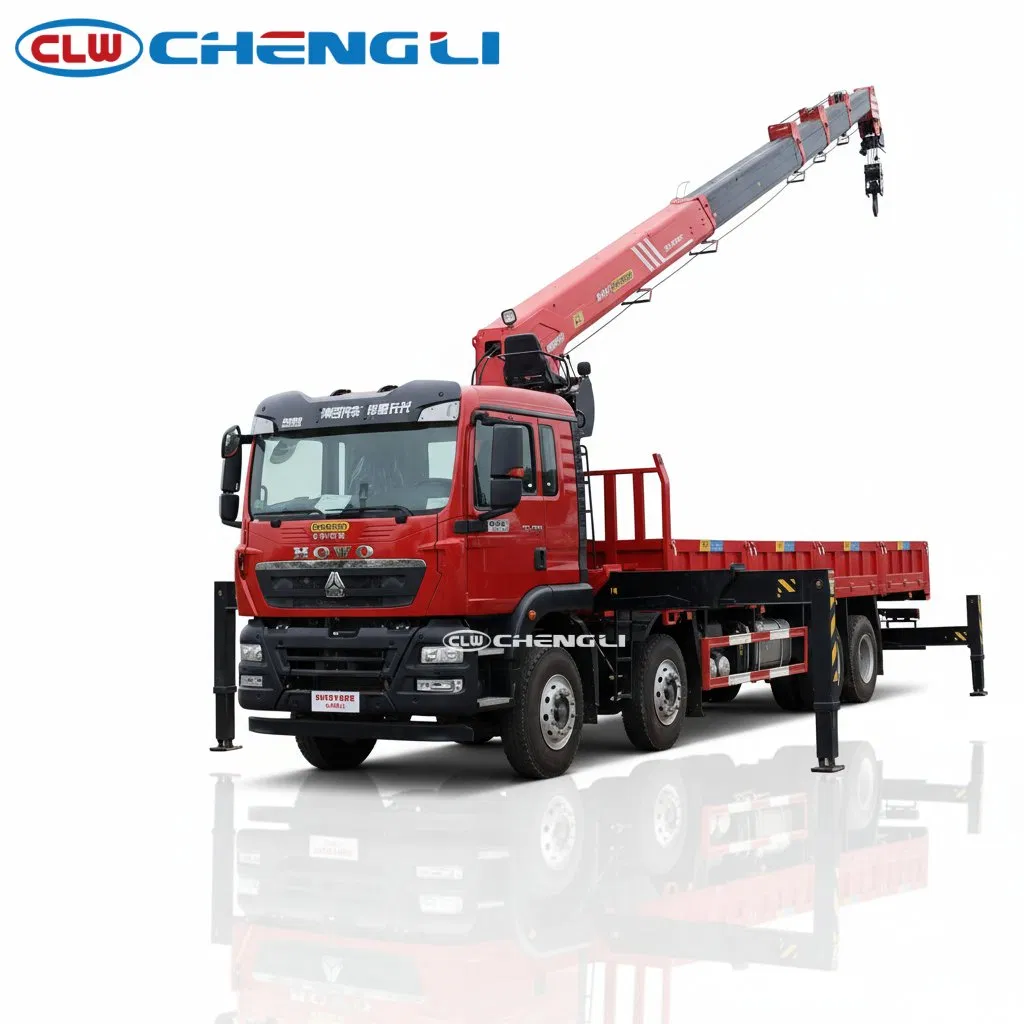
Choose a truck-mounted crane for the load and working radius, then select the boom arrangement and chassis. A maximum lifting figure is not a promise that the crane can handle the same load everywhere within its reach. Describe the heaviest item, its dimensions, pickup position and placement position. Include the distance from the crane's rotation centre to the load. Chengli Group offers crane-truck configurations and project customisation, with the lifting task and complete-vehicle arrangement considered together.
The range spans compact lifting arrangements through larger straight-boom and folding-arm configurations. The examples below are starting points for comparison, not interchangeable capacity classes. A 25 t maximum lifting figure, a maximum height and a maximum working radius are different specifications and should not be combined into an invented lifting point. Read the applicable load chart for the actual installed crane, including the setup and attachments, before turning a maximum figure into an operational requirement.
| Vehicle | Arrangement | Lifting specification |
|---|---|---|
| JMC Double-Cab 2.8 t Crane Truck | Compact telescopic | 2,800 kg maximum lift |
| HOWO 8×4 SQS350-5 14 t Crane Truck | Five-section straight boom | 14,000 kg at 2.5 m |
| CL5310JSQ6FD Folding-Arm Truck-Mounted Crane | Folding arm | — |
| CL52306TQZ6ZQ 6×6 Off-Road Truck-Mounted Crane | Four-section straight boom; 6×6 chassis | 8 t crane specification |
| Shacman 8×4 25-Ton Truck-Mounted Crane | Five-section straight boom; 8×4 chassis | 25,000 kg maximum lift |
Compare straight booms and folding arms by the work
A straight telescopic boom extends along its length and is useful to consider where reach and a relatively direct lifting path matter. A folding or knuckle-boom arrangement articulates through joints and can offer a different approach to loading, positioning and stowage. Neither arrangement is automatically better for every job. Describe whether the vehicle will place building materials, load machinery, handle equipment beside the body or carry tools into a constrained work area.
The table includes a compact JMC crane, the HOWO SQS350-5 straight-boom example, a folding-arm CL5310JSQ6FD and a Shacman straight-boom vehicle. Compare the actual installed equipment rather than deriving the boom type from the truck badge. Ask about the transport position, clearance, control location and any proposed attachment. The required lifting path and access often explain the choice more effectively than selecting the largest advertised maximum lift.
Do not treat a fork, grapple or winch as a free substitute for the ordinary lifting arrangement. Attachments add mass and can change the approved operating configuration. Specify their function and compatibility in the offer. Similarly, a folding boom's compact transport position does not by itself establish the truck's cargo allowance or its ability to work on any ground. Use drawings and the correct chart to connect the boom's geometry with the intended pickup and placement.
Match chassis, cargo space and stabilisers
A compact 4×2 truck may suit smaller equipment handling where access and crew transport are important. Larger 6×4 or 8×4 configurations provide different chassis and body options, while the CL52306TQZ6ZQ offers a 6×6 all-wheel-drive starting point. Drive notation describes the axle arrangement; it does not establish a universal crane capacity or permission to operate on unsuitable ground. Review the complete vehicle's route, dimensions and setup space before choosing solely from the drive layout.
The crane, mounting, stabilisers, body and carried equipment all add weight. The remaining cargo allowance must be assessed for the finished truck, including axle distribution. Do not confuse the crane's maximum lifting weight with the payload the vehicle can transport. A crane capable of lifting an item under one approved setup may still be unsuitable for carrying that item on its body. Agree both the lifting duty and the transport duty in the procurement brief.
Stabiliser deployment and ground support are essential parts of the operating plan. Record available setup width, slopes, nearby excavations and the space needed around the load. Ask for the installed stabiliser arrangement and applicable operating instructions. Do not invent pad sizes, bearing pressures or a reduced-outrigger capacity from a generic guide. Those decisions need the actual equipment documentation and site assessment; a stronger chassis does not remove the need for a suitable lifting setup.
Use the chart to evaluate the working envelope
The HOWO SQS350-5 example distinguishes a 14,000 kg rated lift at 2.5 m from a maximum radius of 19.9 m and a maximum height of 21.3 m. These are separate points of information, not a claim of a 14 t lift at full reach. For a specific job, locate the required radius on the chart for the selected boom extension and setup. Include rigging and attachments in the assessment as required by the crane's instructions.
Ask for the chart corresponding to the crane actually installed, not a chart from another model that shares a similar marketing name. Note extension arrangement, operating sectors and stabiliser conditions. A single maximum figure cannot describe every point within the envelope. The purchasing objective is to establish whether the proposed equipment can perform the defined lift under its approved conditions. Operation itself remains a trained activity governed by the delivered equipment's instructions and the site plan.
Prepare a quotation that covers lifting and transport
Send the load description, mass and dimensions, pickup and placement radius, height requirement and working environment. Add the cargo to be carried, crew needs, route restrictions, destination and quantity. State straight-boom or folding-arm preferences only where the duty supports them. Ask the offer to identify the crane model, mounting arrangement, chassis, stabilisers, controls, attachments and the correct documentation. This prevents a comparison of unrelated maximum capacities from deciding the purchase.
Review the crane-truck category and select two or three candidates for the same lifting brief. If one option provides more reach but reduces cargo space, compare that trade-off explicitly. If a 6×6 layout is proposed, explain the route and traction requirement rather than assuming it is a general upgrade. A complete specification brings together safe setup, the working envelope and transport needs. That is more useful than choosing the biggest lifting number and trying to adapt the project around it.