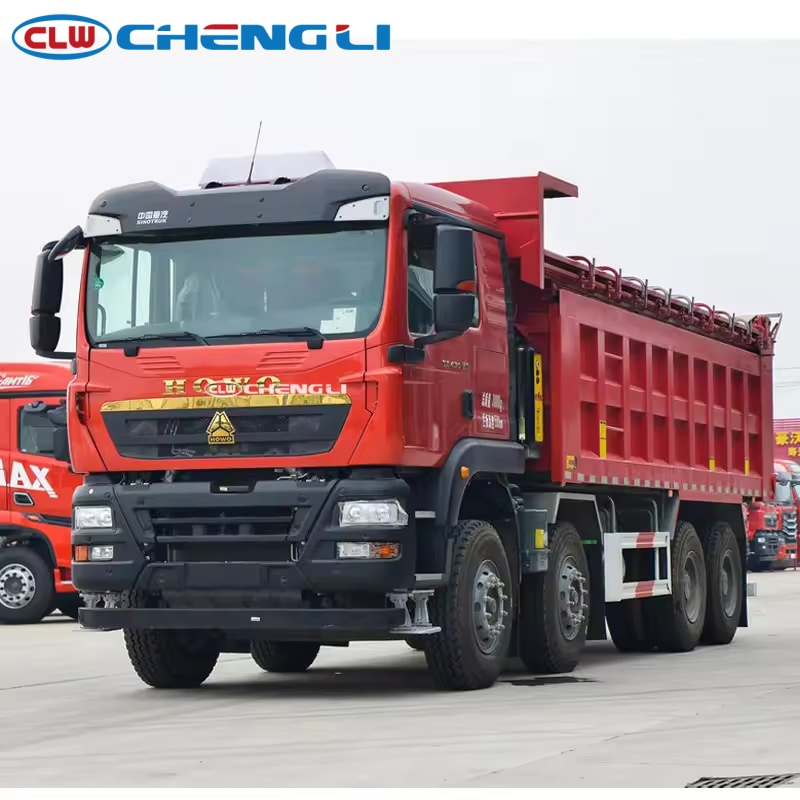
1. Describe the work before choosing the fleet
Write down the materials each truck will carry, whether loads will be weighed, and the expected loading and discharge arrangements. Wet excavated soil, loose aggregate and bulky demolition material create different body and tailgate demands. Record the loader or excavator used for loading, including access around its working area. Ask the body supplier to address loading impact, abrasion and discharge behaviour in the proposed design.
Describe the route as separate sections: public road, maintained project road and temporary site track. Include gradients, tight turns, gate restrictions, overhead obstructions and the available tipping space. Photographs and route sketches help the supplier understand these constraints. They do not establish an axle-load allowance or a safe tipping slope; those remain separate checks for the actual vehicle and site.
Browse the dump truck range after this brief is written. Separate essential requirements from preferences. If a project has two distinct duties, it may need two fleet groups with documented differences. A common colour and cab appearance do not make two chassis, hydraulic systems or payload arrangements interchangeable.
2. Compare complete vehicles, then standardise service items
The following vehicles illustrate different procurement questions. The comparison deliberately keeps drive layout, gross vehicle weight and overall length separate; none of these values alone establishes usable payload or daily output.
| Vehicle | Confirmed identifying detail | What the fleet brief should resolve |
|---|---|---|
| Sinotruk HOWO TX dump truck | 8×4 drive; 11,995 mm overall length | Loading access, tipping area and the body arrangement for the intended material |
| Chengli CLW5100ZWX6 dump truck | 4×2 drive; 9,900 kg gross vehicle weight | Completed-vehicle mass, axle distribution and the payload available for the selected body |
| HOWO 12-wheel dump truck | 8×4 model family | Exact chassis and body drawing, completed mass and the particular build being quoted |
Agree a common service specification where the duty allows it: tyre size, battery arrangement, filtration, lubrication points, hydraulic connections and the identification of replacement components. Have the supplier identify differences explicitly, rather than assuming all trucks with one chassis badge use the same parts. The chassis brand and the completed-vehicle supplier are separate entries in the purchase file.
Standardise the operator interface too. Confirm control labels, power take-off instructions, warning devices, tailgate operation and the location of daily inspection points. Record the cab and driving-side choice for each group. Do not specify a driving side by inference from an export destination; make it an explicit item in the agreed configuration.
3. Build an enquiry that produces comparable quotations
Send one numbered specification with a requested vehicle quantity, duty description, material information, route constraints and preferred body arrangement. Ask each bidder to return the same schedule with deviations marked. Include the proposed chassis model, drive layout, engine and transmission identity, body drawing, tipping mechanism, tyres and fitted accessories. A quotation that omits these items is difficult to compare with a more complete offer.
Keep the commercial schedule alongside the technical schedule. Distinguish the truck, optional equipment, spare parts, training, packing and transport scope. Request an itemised offer and a named handover point; do not infer that a headline reference price includes shipping or destination handling. Any reference price is not an FOB or CIF quotation. Prices for the HOWO 12-wheel model in this comparison remain On request in this guide.
Ask how substitutions will be agreed before manufacture or dispatch. A component change should lead to a revised configuration record and, where relevant, revised mass or operating documents. Decide how the buyer will identify each individual truck in a multi-vehicle order. A fleet spreadsheet should track the vehicle identification number, installed equipment identifiers and agreed exceptions, not just the order quantity.
4. Agree the handover file and acceptance sequence
Request an itemised handover file: vehicle and equipment identification, the agreed specification, operating instructions, maintenance information, parts information and the inspection checklist. Specify the language and format needed by the receiving team. These are procurement requests, not a claim that one document set satisfies every country's import or operating requirements.
Agree who will inspect the trucks, how discrepancies will be documented and which items must be closed before release. The pre-delivery inspection plan should separate chassis, body and hydraulic checks. Use the body-size guide when discussing dimensions and material loading, rather than converting a body-volume figure directly into payload.
At receipt, match each truck and its installed equipment to the purchase file. Reconcile the packing list, tools, keys and agreed spares. Record transport damage and unresolved differences separately from the supplier's original inspection. A signed receipt should state what was checked and what remains open. This gives the fleet manager a usable record without turning a delivery signature into an unsupported promise about every future operating condition.