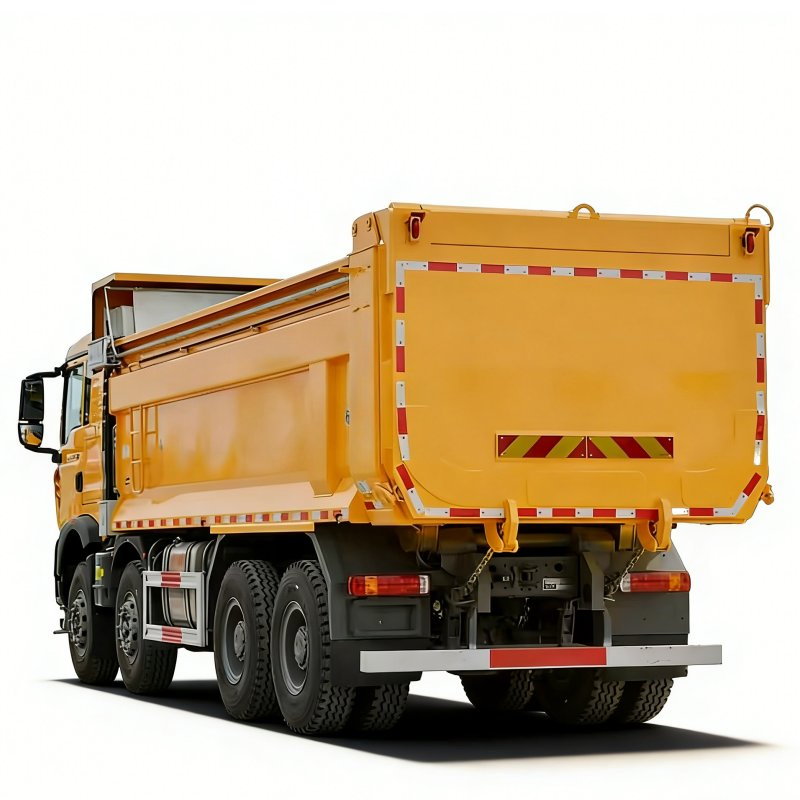
The price of a tipper truck depends on the complete vehicle: its chassis, engine, body, tipping equipment and commercial delivery scope. Compare quotations for the same specification before comparing the total. A lower price may reflect a smaller body, different powertrain, fewer accessories or a different delivery arrangement, rather than a better value truck.
For construction and quarry work, start with the material and route. Our dump truck and tipper truck range includes different chassis layouts and body configurations from Chengli Group Project customisation and OEM/ODM are available. The following approach helps a buyer prepare a useful specification and recognise which differences actually affect the job.
Tipper truck reference prices by configuration
The examples below help compare specific tipper configurations, rather than a single price for every 4×2, 6×4 or 8×4 truck. Open each model to review its equipment and specifications.
| Vehicle configuration | Reference price per vehicle |
|---|---|
| CL3180ZX6BZT 4×2 Dump Truck | USD 15,000-25,000 |
| CL3310ZX6ZT 8×4 Dump Truck | USD 21,000–35,000 |
| Sinotruk HOWO TX 8×4 Dump Truck | USD 25,800–41,200 |
| Foton GTL 8×4 Dump Truck | USD 42,000-44,000 |
| CL2180ZDS6ZK 4×4 Off-Road Dump Truck | USD 31,000–35,000 |
Reference prices only, not FOB or CIF quotations. The final offer specifies the chassis, body, options, quantity and delivery terms. Freight, insurance, taxes and destination charges must be identified in the quotation; these examples do not establish a delivered cost.
1. Separate chassis cost from working equipment
The chassis is more than the badge on the cab. Identify the exact chassis model, engine, transmission, axle arrangement, steering side, suspension and tyres. A quotation for a HOWO truck is not fully comparable with another HOWO quotation until those items are identified. Engine output alone does not describe the gearing, available traction or vehicle dimensions.
Then describe the body separately. Give its internal dimensions, material, plate thickness, tailgate arrangement and any liner or cover required. Dense stone and bulky light material place different demands on the body. Buying extra body volume has little value if the permitted payload is reached before that volume is used.
The Sinotruk HOWO 8×4 dump truck with a 39,500 kg GVW configuration and the HOWO 6×4 10-wheel dump truck are useful starting points for separate enquiries. They are not interchangeable specifications. Ask for a written comparison of chassis, body and mass data instead of treating their reference-price ranges as an axle-count price list.
2. Compare the quote line by line
A short quotation can hide important differences. Use a comparison sheet that lists what is included and what is excluded. Where an item is optional, request its separate amount so that the effect of changing it remains visible.
| Quote item | What to identify | Why it matters |
|---|---|---|
| Chassis and powertrain | Model, engine, gearbox, drive layout and steering side | Establishes the actual vehicle being purchased |
| Body | Internal dimensions, steel, thickness, liner and cover | Defines space, wear protection and discharge arrangement |
| Tipping system | Cylinder, mounting and controls | Must be compatible with the selected body and chassis |
| Working mass | Completed vehicle mass, payload and axle distribution | Distinguishes cargo allowance from body volume |
| Accessories | Spare wheel, tools and agreed equipment | Avoids comparing an equipped vehicle with a bare offer |
| Delivery scope | Named place, freight, insurance and destination charges | Determines which costs remain with the buyer |
Do not automatically select the longest body or largest engine. A site with restricted access may need a different wheelbase or body arrangement. A short repeated haul may have different priorities from a long public-road route. The specification should explain those priorities so that the supplier can price the equipment you need rather than an undefined heavy-duty package.
3. Keep reference prices and contractual prices separate
A reference price is a budgeting starting point, not a complete contract. Read the configuration page associated with each range and send the required changes with your enquiry. Two ranges can overlap even when the vehicles differ; overlapping numbers are not evidence that either vehicle has the same delivered specification.
The Foton GTL 8×4 dump truck provides another configuration to compare. If you ask for a different engine, body, steering arrangement or accessory package, ask the quotation to state the corresponding changes. Do not assume every option shown across a product family is included in every vehicle price.
The final quotation establishes the agreed configuration, quantity and commercial terms; reference prices are not FOB or CIF quotations.
For an international order, ask for the applicable Incoterms rule and a precise named place. The International Chamber of Commerce explains that Incoterms rules allocate responsibilities between buyers and sellers. They do not replace the vehicle specification. Record freight, insurance, inspection scope and destination charges explicitly rather than adding them to an assumed factory price.
Current tipper reference prices
| Configuration | Reference price (USD) |
|---|---|
| Sinotruk HOWO TX 8×4 Dump Truck | 25,800–41,200 |
| Sinotruk HOWO 8×4 Dump Truck, 39,500 kg GVW | 10,000–20,000 |
| HOWO 6×4 10-Wheel Heavy-Payload Dump Truck | 8,000–12,900 |
| Sinotruk 4×2 Mini Dump Truck, 4,495 kg GVW Configuration | 10,800–58,000 |
| Foton GTL 8×4 Dump Truck | 42,000–44,000 |
Reference prices only, not FOB or CIF quotations. The final price depends on the agreed chassis, body, equipment, quantity and delivery scope.
4. Ask about operating costs without inventing savings
The purchase price is only one part of the decision. Request maintenance information, consumable specifications and the parts needed for the intended chassis. Identify who will service the truck and where suitable parts can be obtained. This is a procurement question, not a promise of a local support network.
A supplier cannot credibly calculate your fuel cost without the route, load, gradients, traffic and operating cycle. Provide those inputs and ask how the proposed powertrain suits them. Likewise, tyre wear and body life depend on the actual application; avoid comparing unsupported lifetime claims.
Unloading conditions deserve their own line in the brief. HSE's tipping checklist highlights stable, level ground, overhead hazards and load distribution. That guidance is an operational reference, not a statement of import approval for your country. Include the unloading layout and site constraints so that the body and tipping arrangement can be assessed together.
5. Send a quotation brief that can be priced
Include the material, required cargo mass, expected daily distance, route surfaces, loading method and unloading area. Add the desired chassis or acceptable alternatives, drive layout, steering side, body requirements, quantity and destination port. If you have a tender document, identify which clauses are mandatory and which are preferences.
Ask each offer to show the vehicle model, completed mass, axle limits, agreed equipment and commercial exclusions. Keep optional items separate and record any changes to the initial proposal. This creates a comparison that the purchasing team, operator and supplier can all understand.
Request a project quotation with that brief. A clear enquiry usually produces a more useful answer than asking for the cheapest tipper without explaining what it will carry.